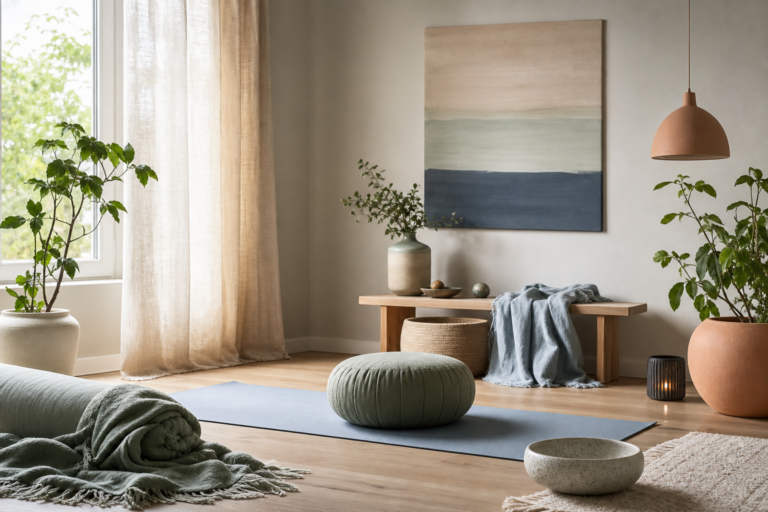
A mindful routine is easier to keep when the room quietly supports it. Many people try to build better meditation, stretching, or home fitness habits by relying only on willpower. The problem is that willpower has to be remembered. A well-designed space does some of that remembering for you.
Printed visual reminders can make a wellness corner feel intentional without turning it into a noisy motivational wall. A simple breathing diagram, a gentle movement sequence, or a calm image near the yoga mat can reduce friction at the exact moment when you might otherwise skip the practice.
Why the room matters before the routine
Zen routines work best when they are easy to start. If your mat is hidden in a closet, your timer is buried in a phone app, and your plan lives in a note you never open, the routine asks for too many decisions. A visible setup lowers that barrier.
This does not mean the space has to be large or expensive. A corner beside a window, a section of bedroom wall, or a quiet area near a desk can become a home meditation space when the objects in it send one clear message: pause, breathe, move, return.
Useful visual cues for a wellness corner
The best printed cues are practical, calm, and specific. They should help you begin a mindful routine, not distract you from it.
| Visual cue | Where it fits | How it helps |
| Breathing pattern poster | Wall near a mat or chair | Gives the eyes a steady point during short stress relief breaks |
| Stretch sequence print | Beside yoga blocks or a foam roller | Removes the need to choose the next movement |
| Habit tracker | Door, desk, or wellness shelf | Turns small sessions into visible progress |
| Soft landscape or abstract photo | Meditation corner | Creates a visual boundary between routine time and busy time |
A practical setup flow
Start with one anchor wall
Choose the wall or surface you naturally face when you sit, stretch, or begin a workout. Keep it uncluttered. One large print usually feels calmer than many competing pieces.
Pick a cue that solves a real problem
If you often forget to breathe slowly, use a breathing pattern. If you stop exercising because you do not know what to do next, print a simple mobility flow. If consistency is the issue, use a habit tracker.
For a printable wall poster that can become a steady visual reminder in a home meditation space, Rasterbator can help turn a favorite calming image, routine chart, or movement guide into an oversized print assembled from regular sheets of paper.
Make the print support the habit, not pressure it
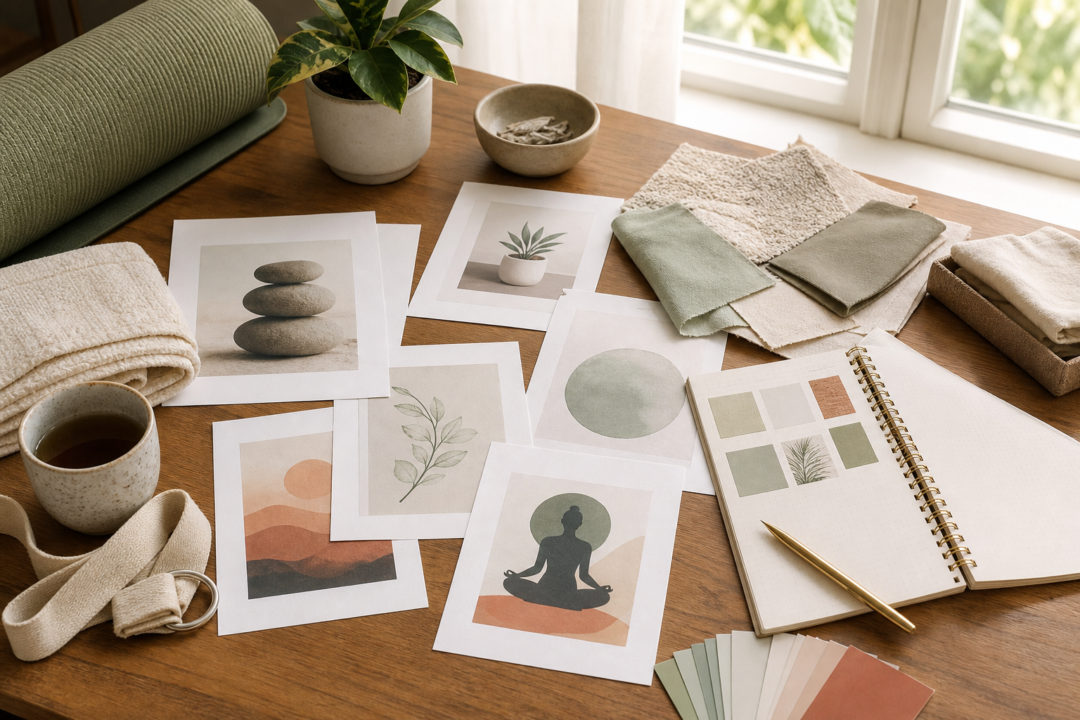
Wellness design should feel inviting, not demanding. Avoid harsh slogans, crowded text, or images that make the room feel like a performance space. A good reminder simply makes the next step obvious.
For meditation, use soft contrast and enough empty space for the eye to rest. For home fitness, use clear poses or simple zones. For stress relief, place the print where it can be seen during a short breathing break rather than only during a full workout.
It also helps to match the cue to the energy of the practice. A recovery corner may need quiet landscapes or abstract shapes. A mobility area can handle a little more structure, such as a sequence of simple positions or a progress grid.
Keep the system light
- Review the wall once a month and remove anything you no longer notice.
- Keep one printed routine for busy days and one for longer sessions.
- Place props nearby so the visual cue connects directly to action.
- Let the corner stay quiet. The goal is readiness, not decoration overload.
- If the poster starts to feel like background noise, rotate it with a calmer image or a simpler routine card.
A mindful space is a prompt to return
The value of a printed reminder is not that it makes a routine perfect. It makes returning easier. On a stressful day, the room can offer a small invitation: sit down, take one breath, stretch for five minutes, or begin again. That kind of support is often enough to keep a wellness habit alive.
Over time, these small environmental choices become part of the routine itself. The mat, the cushion, the light, and the printed cue all point in the same direction. They make wellness feel less like a task and more like a place you can re-enter.